International Women’s Day 2026 - Agnes' Story
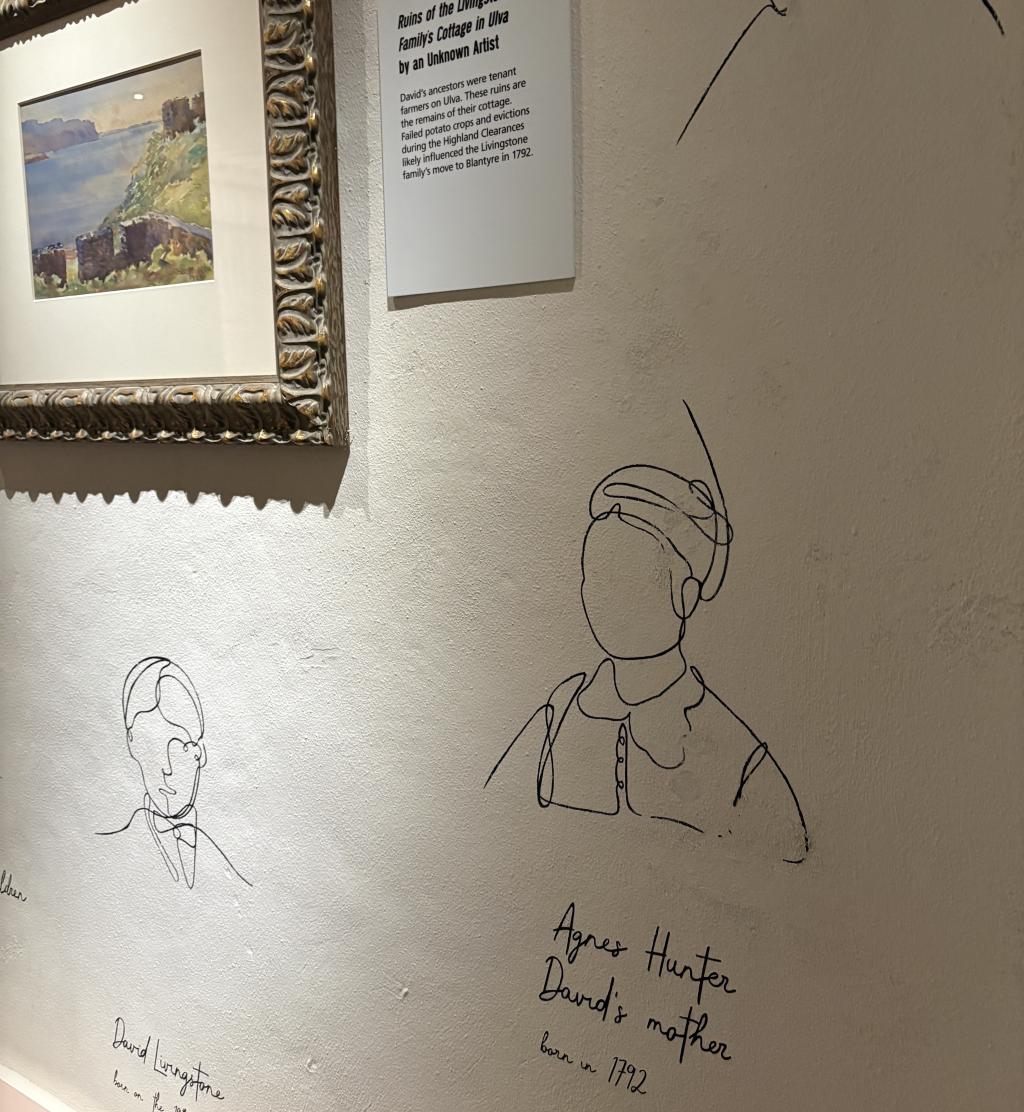
In the introduction to his 1857 book Missionary Travels and Research in South Africa, David Livingstone writes five substantial paragraphs about his father and his father’s ancestry but only one short sentence about his mother, describing her as an anxious housewife struggling to make both ends meet. In the same passage he writes about her interfering by “jumping up and snatching the books out of my hands”.
This does not mean that David appreciated his mother or cared less for her than for his father but sums up the place of a working-class woman of the time, fully supporting the family while remaining almost invisible in the background. Agnes was born in Airdrie in 1783 to David Hunter, a tailor, and his wife, Janet (Moffat) Hunter. David Hunter was an industrious man who had a cottage and a croft in Airdrie, so Agnes had a reasonably comfortable early life until her mother’s health failed. Agnes nursed her mother through a long illness until Janet died when Agnes was only fifteen years old and when things would change for the Hunter family. For many years David Hunter had been too generous to the many friends and neighbours who had turned to him for help and found himself in a poor financial situation.
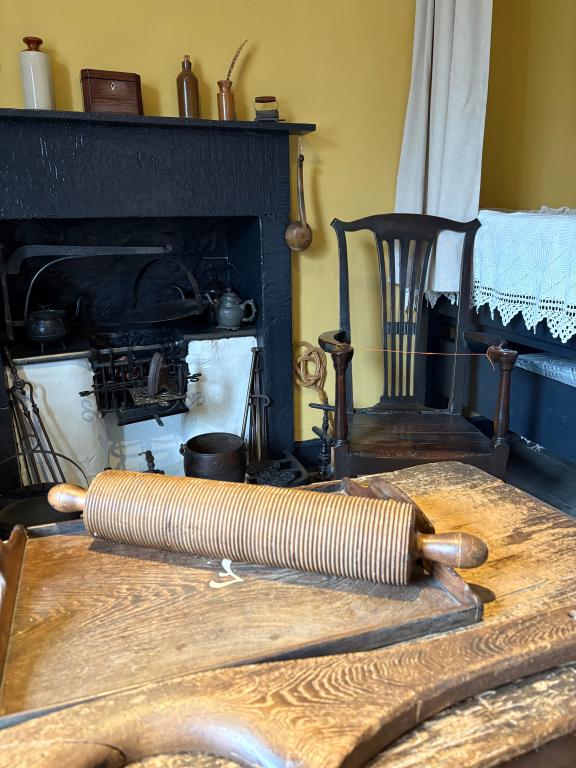
The Hunter family moved to Blantyre Mill Village where Mr. Hunter was employed as a tailor and Agnes kept home for him and her brothers and sisters. In time a young man named Neil Livingstone was apprenticed to Mr. Hunter to learn tailoring, which was how Agnes met her future husband. Agnes and Neil married in 1810 and, for a short time, lived in Glasgow where their first son, John, was born. They disliked Glasgow and came back to Blantyre to move in with her father in Shuttle Row in time for the birth of their second son, David, named after his grandfather, Mr. Hunter. Agnes would go on to give birth to several more children but, of these, only one son, Charles, and two daughters, Janet and Agnes, would survive to adulthood. Agnes is described as a delicate little woman with beautiful eyes which her son David would inherit. She is noted as being a loving mother, bright and serene, very active and a good storyteller. She ran a clean and orderly house, no mean feat with three adults and five children in a single room and worked hard at her household duties.
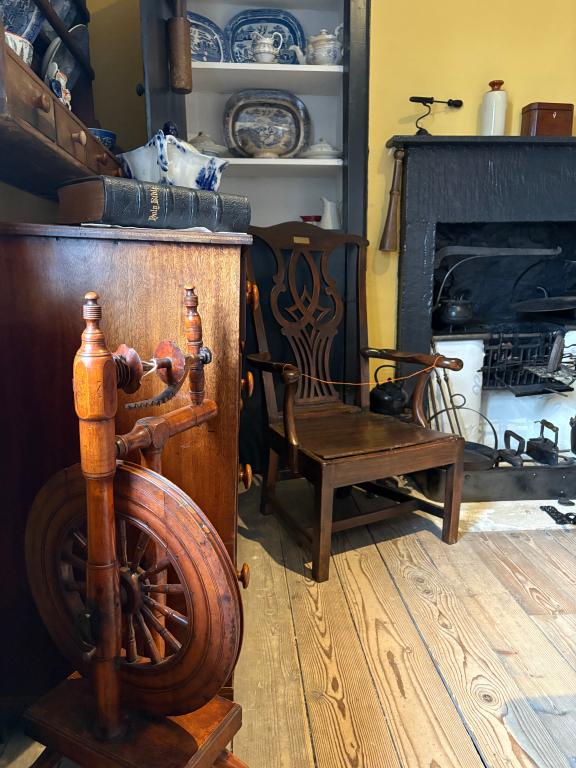
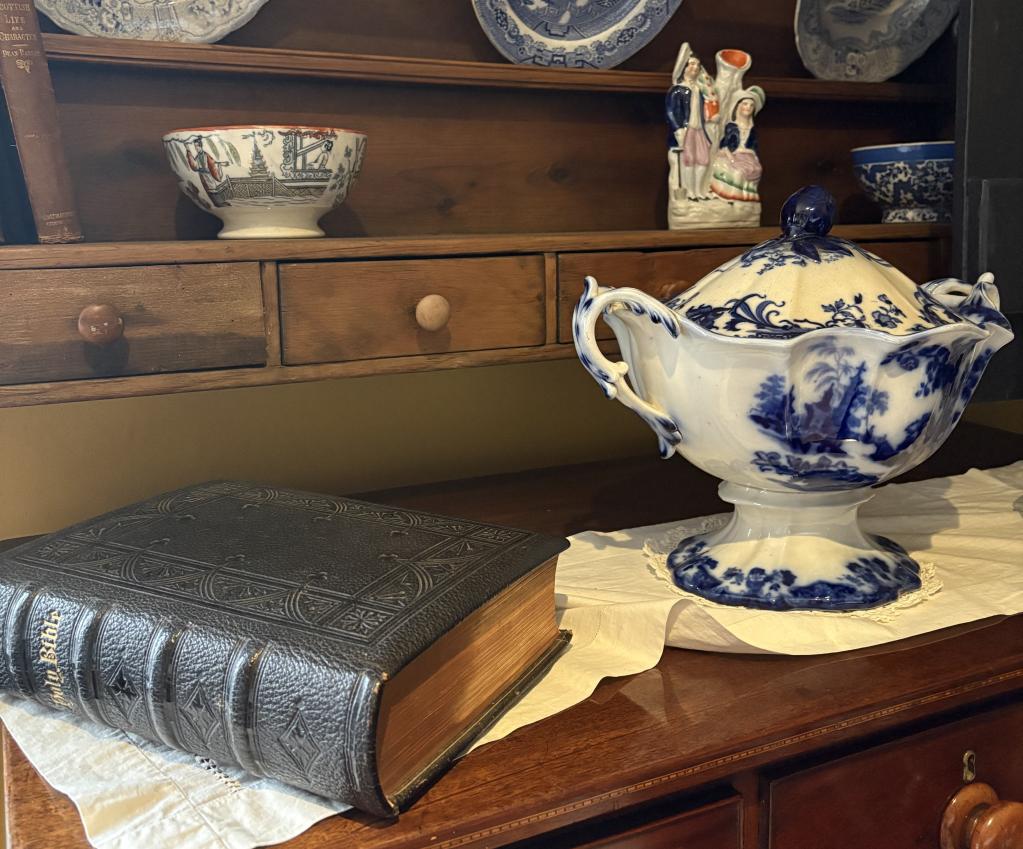
Neil Livingstone did not continue his career in tailoring, nor could he settle as a clerk in the Blantyre cotton mill, so he became a tea salesman, which allowed him to enjoy more time outdoors. Money was short but Agnes was known to have fierce pride and high standards at all times. In her first home in Glasgow home furnishing was frugal but included a handsome chest of drawers, a mark of respectability for the time. Perhaps Agnes remembered having nice things in Airdrie and wanted a little extra to start her married life. She was also noted for the way in which her children were turned out, especially for Church on Sundays when all of them, including the three boys, were dressed in ribbons and lace, causing the children some embarrassment. The Sunday clothes caused so much comment that the wife of the Mill manager spoke to Agnes about it but, humble as she was, Agnes did not see the need to change her ways.
Her determined nature also showed when the family joined the Independent Church in Hamilton which meant a walk of three miles each way to go to services. Church members who lived nearby were by way of inviting members who came from a distance to join them for a meal between services. While Agnes was grateful to go to their homes and sit at their tables, she would only accept a kettle of boiling water to make tea for her family as she brought all their food with her. John started work in the Mill when he was five years old, but the Factory Act of 1819 meant David did not go to work until he was ten. Agnes could see that David was ambitious and, although it went against her instinct, she sometimes had to defend him in differences with his father. She also occasionally upset David by making him put down his books and go to bed as he had work the next day.
David was something of a family favourite and Agnes must have missed him greatly when he went to Africa, looking forward to reading the many letters he sent home. She would also have been touched when his oldest daughter was named after her, although David wasted the gesture somewhat by writing that it had not been his choice as he thought it was not a pretty name. In time Agnes, Neil and their two daughters moved to Hamilton where they rented a cottage. Agnes must have been overjoyed when David’s wife Mary and her four children came from Africa to stay in Hamilton in 1852 and desperately upset when things did not work out between them.
It was a much happier time when David, Mary and the children visited in 1857, although Neil had already died. In time Agnes and her daughters would become more involved with David’s children and would take on the responsibilities of bringing them up after the death of their mother in 1862. Agnes was confined to bed for many years with a lingering illness, probably caused by the hardships of her life. Although very weak she was to see her son David for the last time in 1865 when he returned from his Zambezi expedition. David was in Oxford when she died on 18th. June 1865 but came back to Hamilton for her funeral before leaving Scotland for the last time. Despite seeming to spend her life in the background Agnes was much loved by her family and gave them the confidence to make successful lives for themselves. Her son David certainly appreciated her. In 1866, a year after she died, he came across the telegram he had received in Oxford telling him of her death and wrote that ‘it affected me not a little’.